9th June 2026
Doing Death Differently: How To Feel More Prepared and Less Afraid
By George Cox
Sisters Lindsey and Katy Vigurs are united by a shared mission: to work with the living, the dying, and the dead to create an open and compassionate culture around all things death and dying.
Founded in 2018, Dead Good exists to host a variety of educational and creative workshops and talks, covering everything from planning your goodbye with friends and family to creating homemade tributes and acts of remembrance.
Guided by the principle that curiosity, open-mindedness, and imagination are vessels through which we can honour our own legacies and those of the people we love, Lindsey and Katy spearhead a growing community around the world empowering people to normalize death and dying as a human experience.
With very different backgrounds – Katy having spent 20 years as an education researcher and university teacher and Lindsey an artist – the sisters bring their unique perspectives to what many still consider a controversial, difficult topic.
Here, Tithe Green’s George Cox dives into where Dead Good came from, why it’s important, and how we can tie our legacy into ongoing care for the planet and the people we leave behind.
Tell us the story behind Dead Good Legacies – where did it start and where does the name come from?
Dead Good started with a mix of frustration and curiosity. Frustration at how death is either avoided entirely or wrapped up in stiff, outdated traditions that don’t reflect how people actually live. And curiosity about what might happen if we made space for more honest, creative, human conversations about it.
The name “Dead Good” does a bit of heavy lifting for us. It’s a Northern phrase meaning “really good,” but it also lets us put the word ‘dead’ right out front. We wanted something that felt accessible, a bit irreverent, and disarming enough to invite people in rather than scare them off.
What is the ultimate purpose of Dead Good and how do you honour this in the work you do?
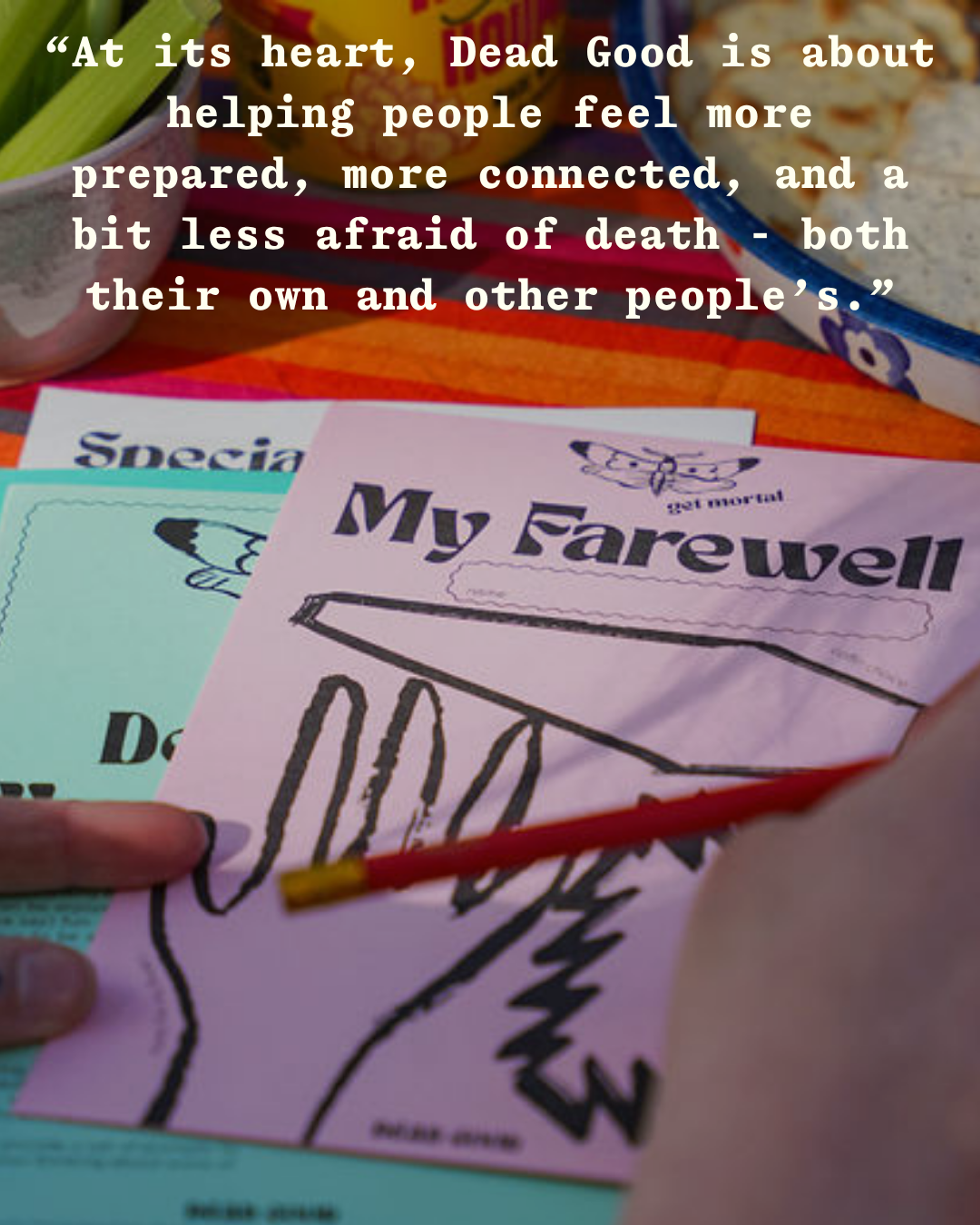
At its heart, Dead Good is about helping people feel more prepared, more connected, and a bit less afraid of death, both their own and other people’s.
We’re trying to shift the culture from avoidance to engagement. That looks like creating spaces where people can explore what matters to them, express their wishes, and think about legacy in a way that feels imaginative and personal, not prescriptive.
We honour this through everything we do, such as workshops, resources, creative activities, and community conversations. We don’t tell people what a “good death” or “good funeral” looks like. We help them figure out what feels right for them, and support them to do it differently.
Your work invites people to think & talk about death in a very open way. Why do you think this is important? What are your thoughts on the level of grief literacy in our society?
It is important because avoiding death doesn’t make it go away, it just makes it harder when it arrives.
When we don’t talk about death, we don’t build the emotional or practical skills to deal with it. That’s where death education and grief literacy comes in, and honestly, as a society, we’re not great at it. Many people don’t know how best to support someone who is grieving. So people default to awkwardness, silence, or trying to “fix” something. We'd like to see this change.
Open conversations help normalise the reality that grief is part of life. They also give people language, confidence, and permission to show up for each other better.
We’re not trying to make death less sad. We’re trying to make people less alone when death and grief loom large in their lives.
I know you are passionate supporters of natural burial. Why is this – what makes it such a good option in your opinion?
It’s a way of returning to the earth that feels simple and uncomplicated. To us it is a gentler, more ecological approach that works with nature rather than against it.
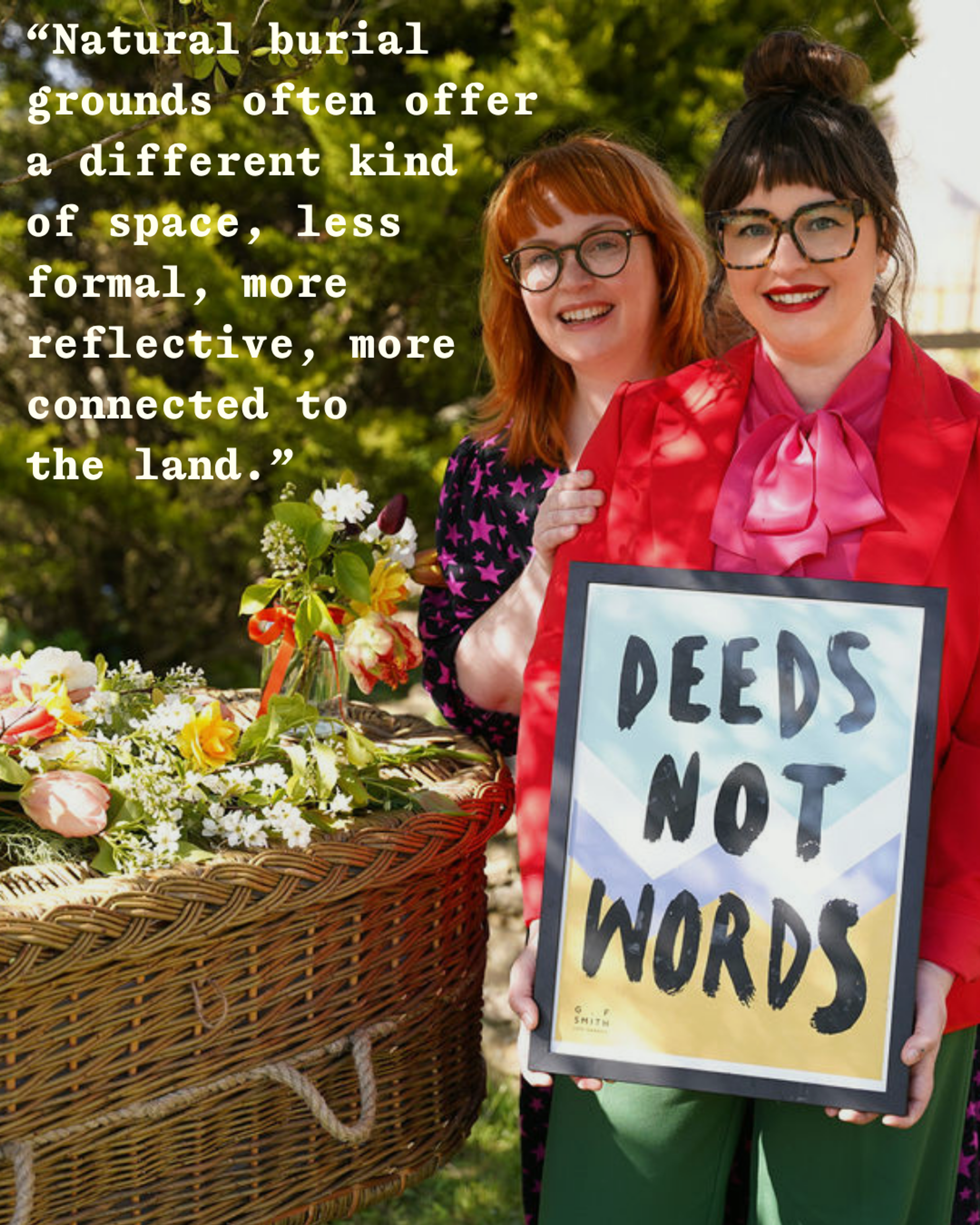
But it’s not just about the environmental benefits (though those really matter). Natural burial grounds often offer a different kind of space, less formal, more reflective, more connected to the land. That can really shape how people experience a funeral and their ongoing relationship with that place.
It’s not the send-off of choice for everyone, but it’s a powerful option that more people should know about.
What does an environmentally conscious funeral or legacy mean to you?
For us, it’s about alignment.
An environmentally conscious funeral or legacy reflects how someone lived or how they wanted to live. It considers the impact on the planet, but without losing sight of the emotional and cultural needs of the people involved.
That might look like natural burial, low-impact materials, local sourcing, or simpler ceremonies. But it can also be about the stories we leave behind, the values we pass on, and the ripple effects of our lives.
It’s less about perfection and more about intention.
You’re strong advocates for planning ahead and talking about our goodbyes before they happen. How can planning ahead actually support the people we love?
For us, planning ahead is one of the most practical acts of care you can offer your family and friends.
When someone dies, the people around them are often navigating grief, shock, and a surprising amount of decision-making. If you’ve already shared your farewell wishes, whether that’s funeral preferences, practical details, or even just what matters to you, it takes some of the guesswork away.
It reduces conflict, and gives people confidence that they’re doing right by you.
And beyond the logistics, it can open up meaningful conversations while you’re still here. That’s where the real value is, in the connection it creates.
If you could change one thing about how our culture approaches death, what would it be?
We’d make it completely normal to talk about death and grief.
Not just in crisis moments, but in everyday life. Around kitchen tables, on walks in the park, in a cafe. The same way we talk about birth, relationships, or the future.
Because when death becomes part of the conversation, everything shifts. People make more intentional choices. They support each other better. They live differently.
It doesn’t have to be dramatic. Just open and honest.
For more information, visit the Dead Good website here.
Katy and Lindsey are on Instagram @deadgoodlegacies.
For more information on planning ahead with Tithe Green, click here.
Many thanks to Katy and Lindsey for their time chatting with us and sharing more about the brilliant work they do.