13th July 2026
The Calabash Urn: A Beautiful Biodegradable Urn for Ashes
By George Cox
Choosing an urn to hold the ashes of a loved one is a deeply personal and often painful decision. It is not something we think about until we have to.
When that time comes, the options available to us should be beautiful and made with care; something that feels as though it honours the person it holds.
At our natural burial ground, we only allow biodegradable urns, to better protect the environment around the interment location. Often families plant a tree above an ashes interment, so it is especially important that the materials introduced to the ground do not pose a risk to the growth of the tree.
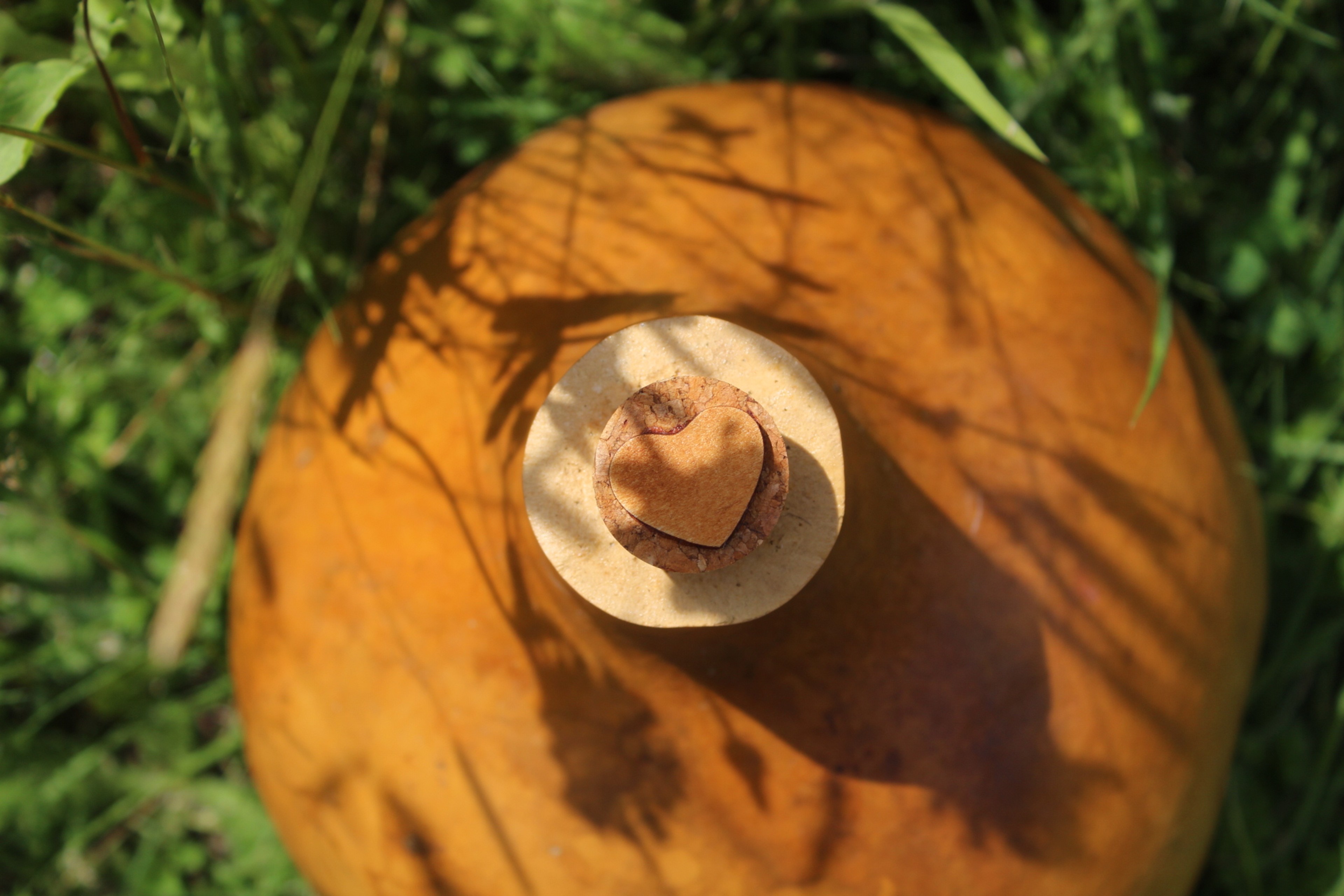
We were greatly moved when we discovered the urns created by family-run team And Sow To Bed, who create natural, hand-finished Calabash urns, and asked them to share with us the story of how their urns came to be.
The Calabash urns are available to purchase here.
And Sow To Bed – the story behind the Calabash urns
As told by Ray Hagerty, co-founder.
The journey began when my mother passed away. Our family wanted to honour her in a way that reflected both who she was and what she loved. We planted her favourite olive tree above her ashes, creating not just a memorial but a living reminder of her that our children and future generations could enjoy.
However, when her ashes were returned to us, they arrived in a simple cardboard box. It felt impersonal and somehow at odds with the love and care we wanted to show her.
We began looking for a biodegradable urn that was both environmentally responsible and aesthetically beautiful. During our research we also discovered that cremated ashes can affect soil chemistry, so it became important to find an urn that would biodegrade gradually, allowing nature to absorb everything over time rather than all at once.
We explored many different materials from around the world — bamboo, leaves, reeds and other natural products — but none quite felt right. Then we discovered the Calabash.
It was one of those rare moments when everything simply fell into place. The Calabash was completely natural, beautifully individual, biodegradable and, perhaps most importantly, had been used by cultures around the world for thousands of years as a vessel for life's essentials. It seemed entirely fitting that it should become a vessel for one final journey.
My mother's Calabash was placed beneath her olive tree, where it continues to nourish the ground as the tree flourishes above it. She still feels part of our family gatherings beneath its branches – never missing one of our summer barbecues.
Having worked with bereaved families, I have seen just how important meaningful choices are. My own experience with my mother’s funeral brought that into even sharper focus and ultimately led to the creation of And Sow To Bed.
Today, our aim is to help other families create similarly meaningful memorials that honour both the people they love and the natural world they leave behind.
The Calabash (Lagenaria siceraria), sometimes known as the bottle gourd, is one of humanity's oldest cultivated plants. For thousands of years, people across Africa, Asia, Central America and South America have grown them not only for food, but because once dried they form an incredibly strong natural shell that can be used in many different ways.
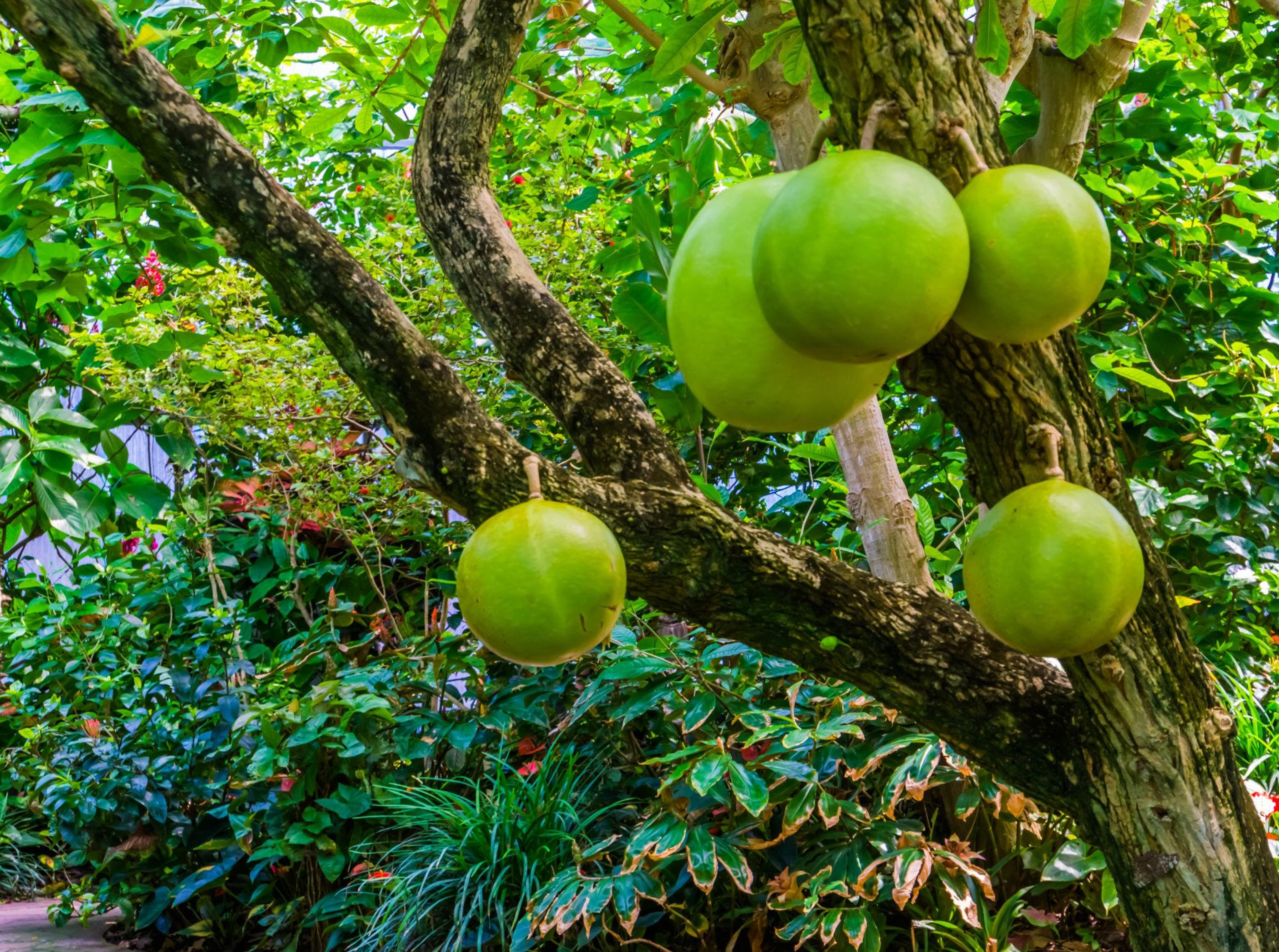
Historically they have been used as water vessels, bowls, storage containers, musical instruments, drinking vessels, ceremonial objects, and pieces of art.
The Calabash provided a completely natural vessel long before modern manufactured materials existed. That history makes it especially meaningful as an urn. Rather than being manufactured from synthetic materials, the Calabash has always been a vessel - something designed by nature to carry and protect precious things.
Its natural life cycle also mirrors the journey celebrated by natural burial. It grows from the earth, matures, serves a purpose and ultimately returns harmlessly to the soil.
The Calabash is entirely plant-based. Unlike many traditional urns manufactured from metals, plastics or composite materials, it will naturally biodegrade when buried in suitable soil conditions.
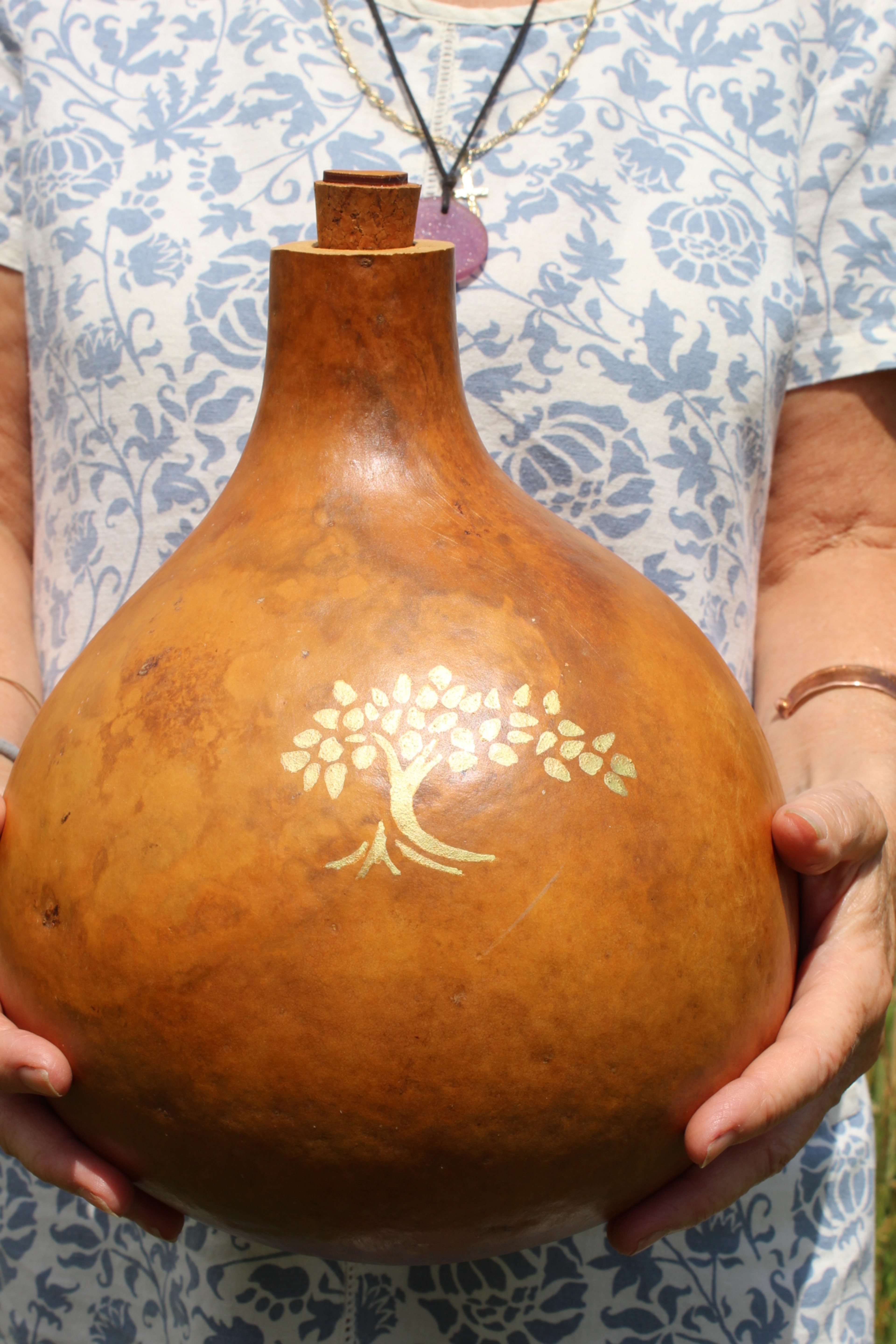
For families choosing natural burial, this is an important consideration. They often wish every part of the funeral to reflect the same environmental principles.
Using biodegradable materials means that nothing unnecessary remains in the landscape. Instead, the urn becomes part of the natural cycle, gradually returning to the earth while allowing the surrounding environment to continue thriving.
For many people, there is comfort in knowing that even after death, they are leaving behind as little environmental impact as possible.
For us, this is important, too. The Calabash we use for our urns is grown and harvested using traditional methods by free trade farmers in Kenya, helping to support rural communities.
The fruit is left to fully mature before harvesting, and naturally dried until only the hard shell remains. The shell is de-seeded, cleaned, and carefully prepared. When required, local artisans hand-carve for a more defined shape, and then apply a natural protective oil.
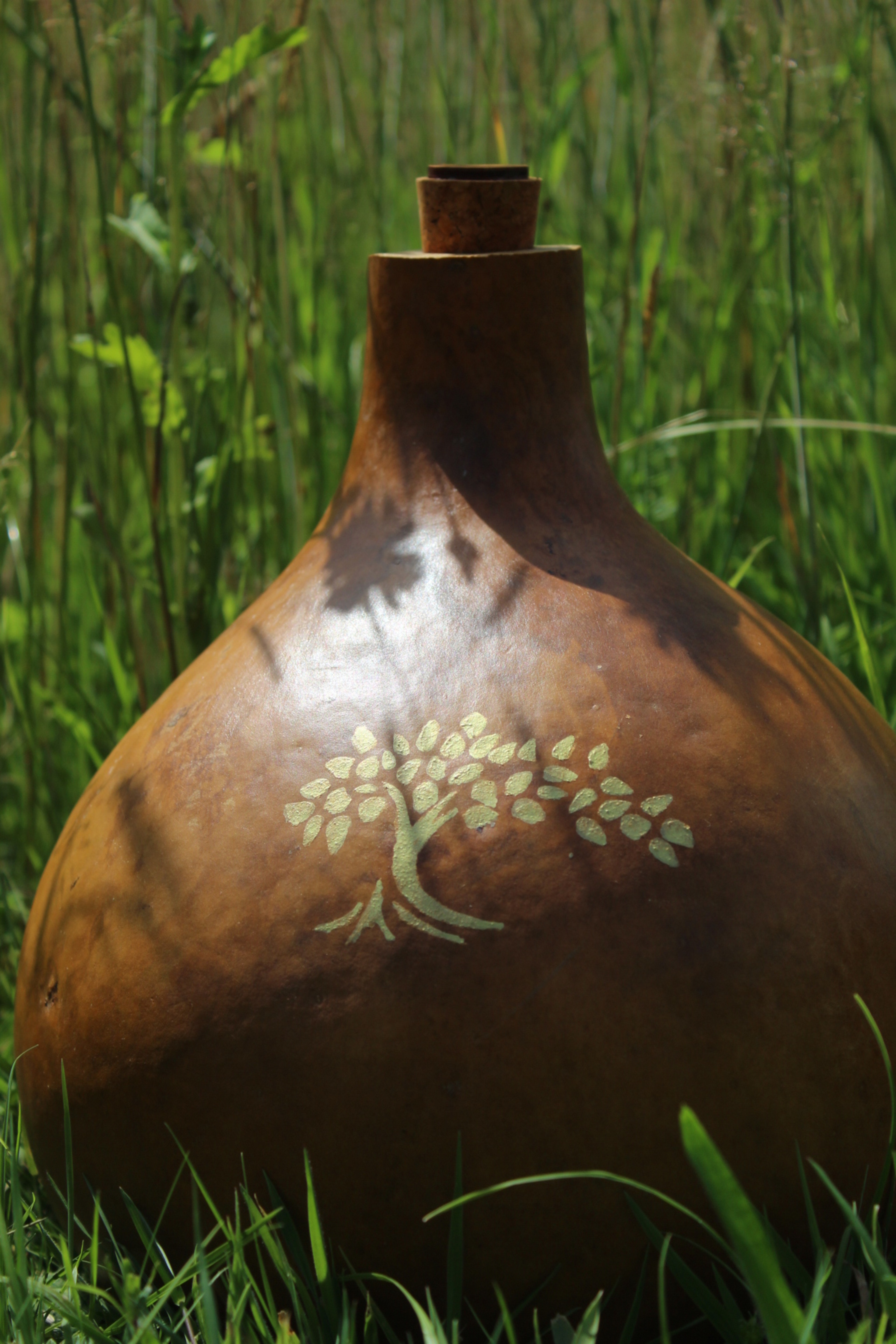
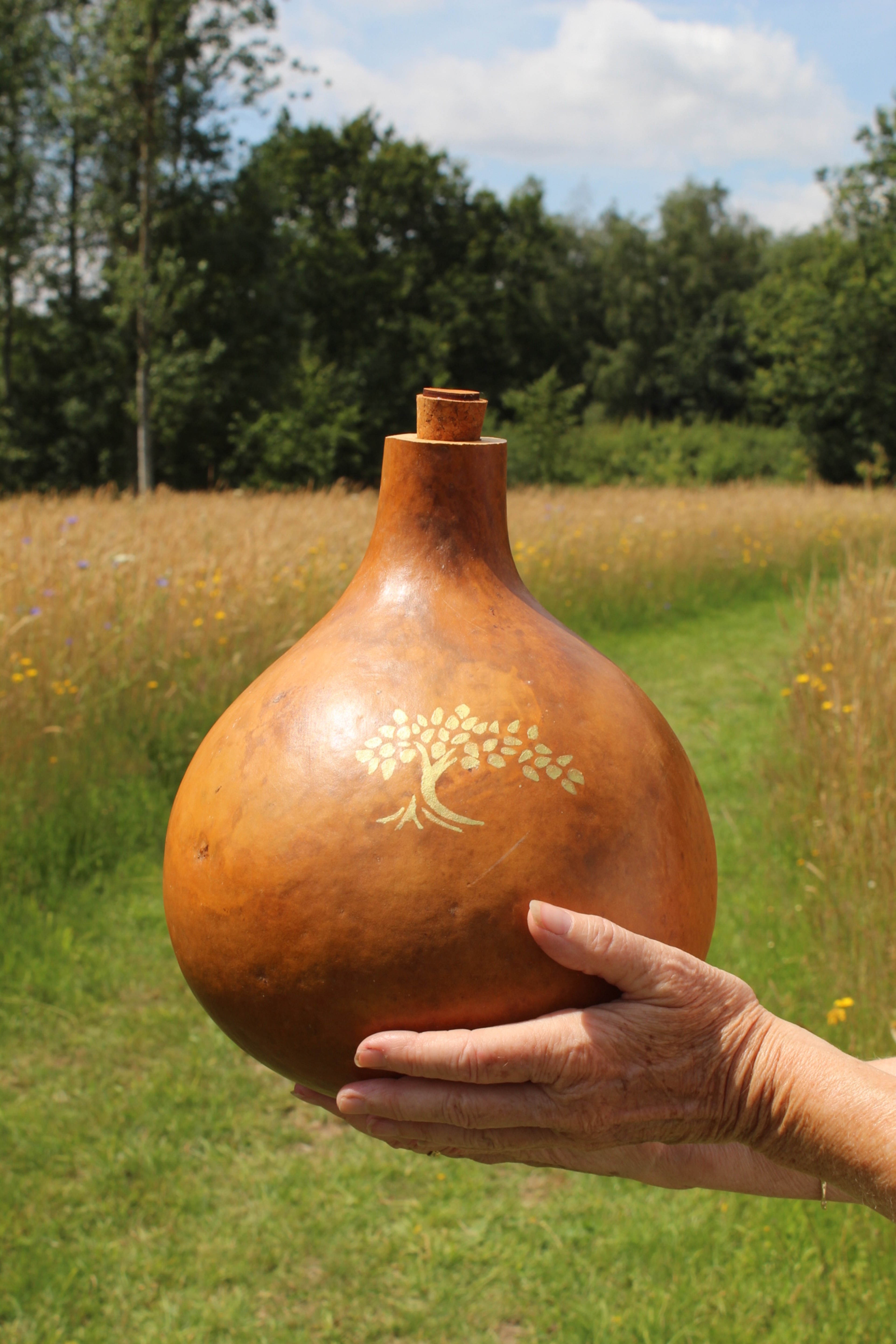
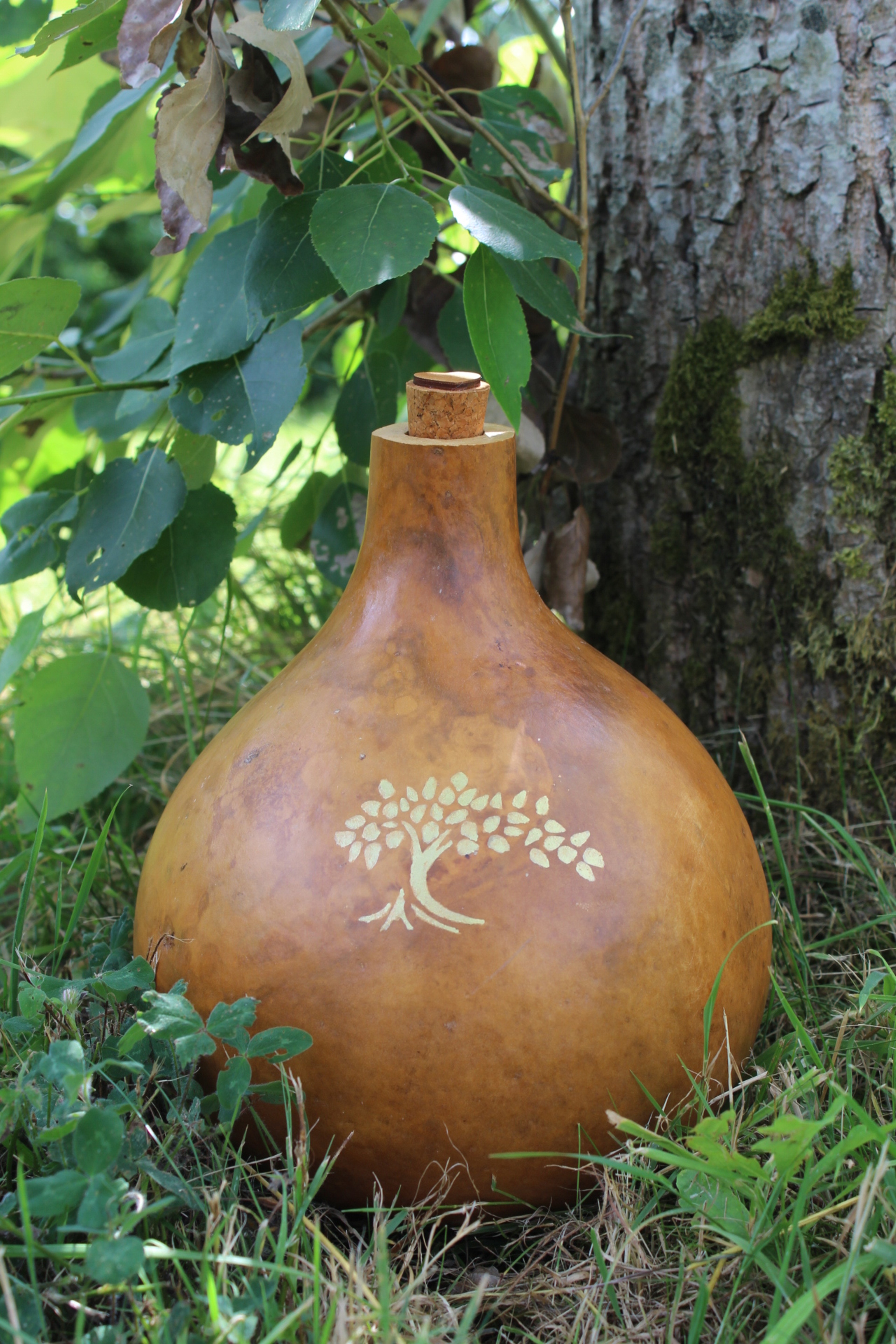
We paint a tree of life on each Calabash to represent the interconnectedness of all living things, but families can opt out of this if they wish. We can create personalised hand-painted designs if requested. All paints, pastels, fixatives and varnishes are water-based and eco-friendly. Each Calabash is presented in an organic eco-friendly cotton bag.
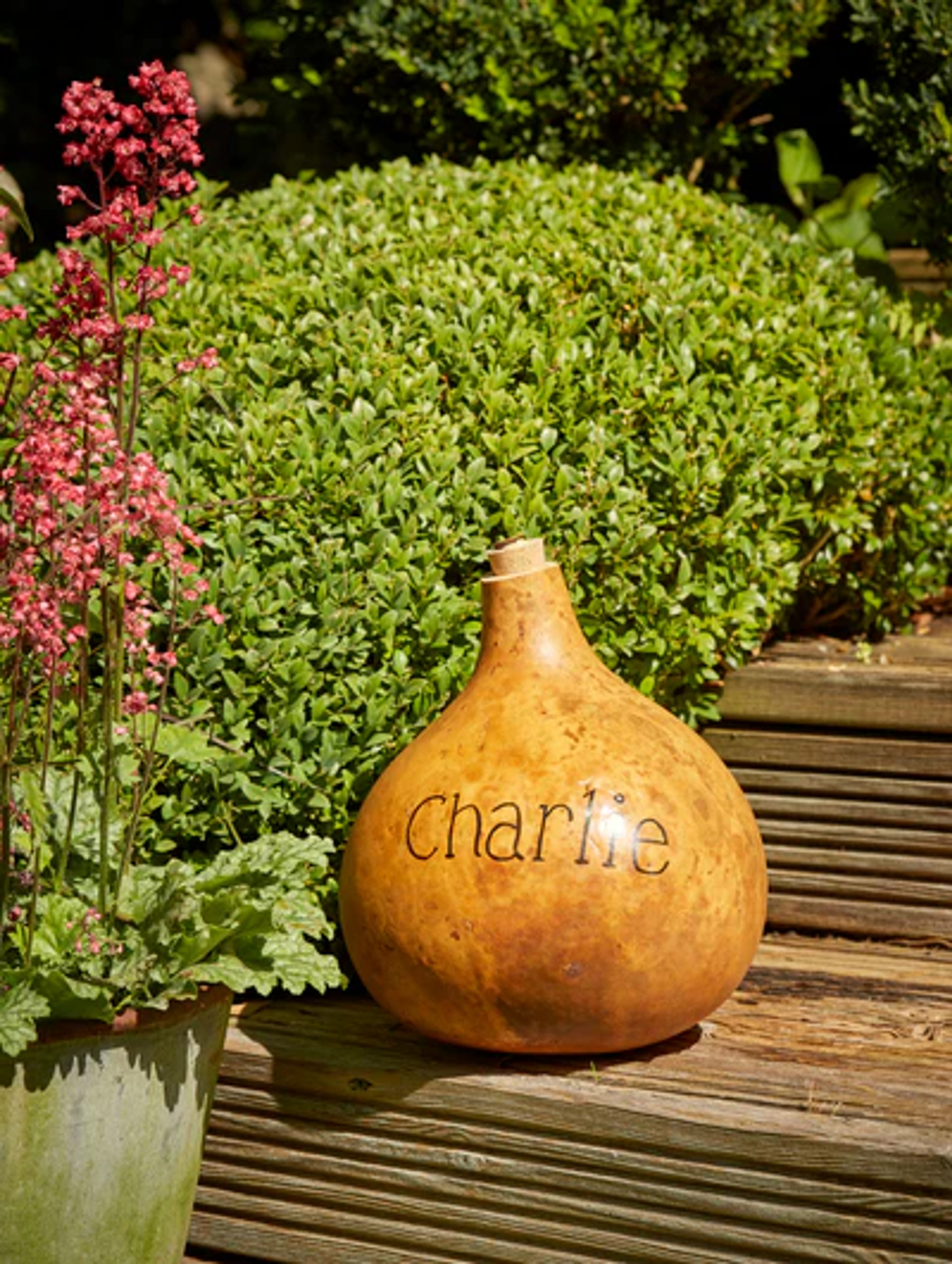
Every Calabash is unique before any personalisation begins, and the aim is always to enhance that natural individuality rather than disguise it. Families often tell us that personalisation transforms the urn from simply being a container into a deeply personal tribute - one that reflects the character and story of the person it honours while remaining true to the values of natural burial.
Natural burial represents a return to something deeply human.For centuries, people understood that we are part of nature rather than separate from it. Green burial reflects that understanding by allowing the body - and every element surrounding it - to return naturally to the earth.
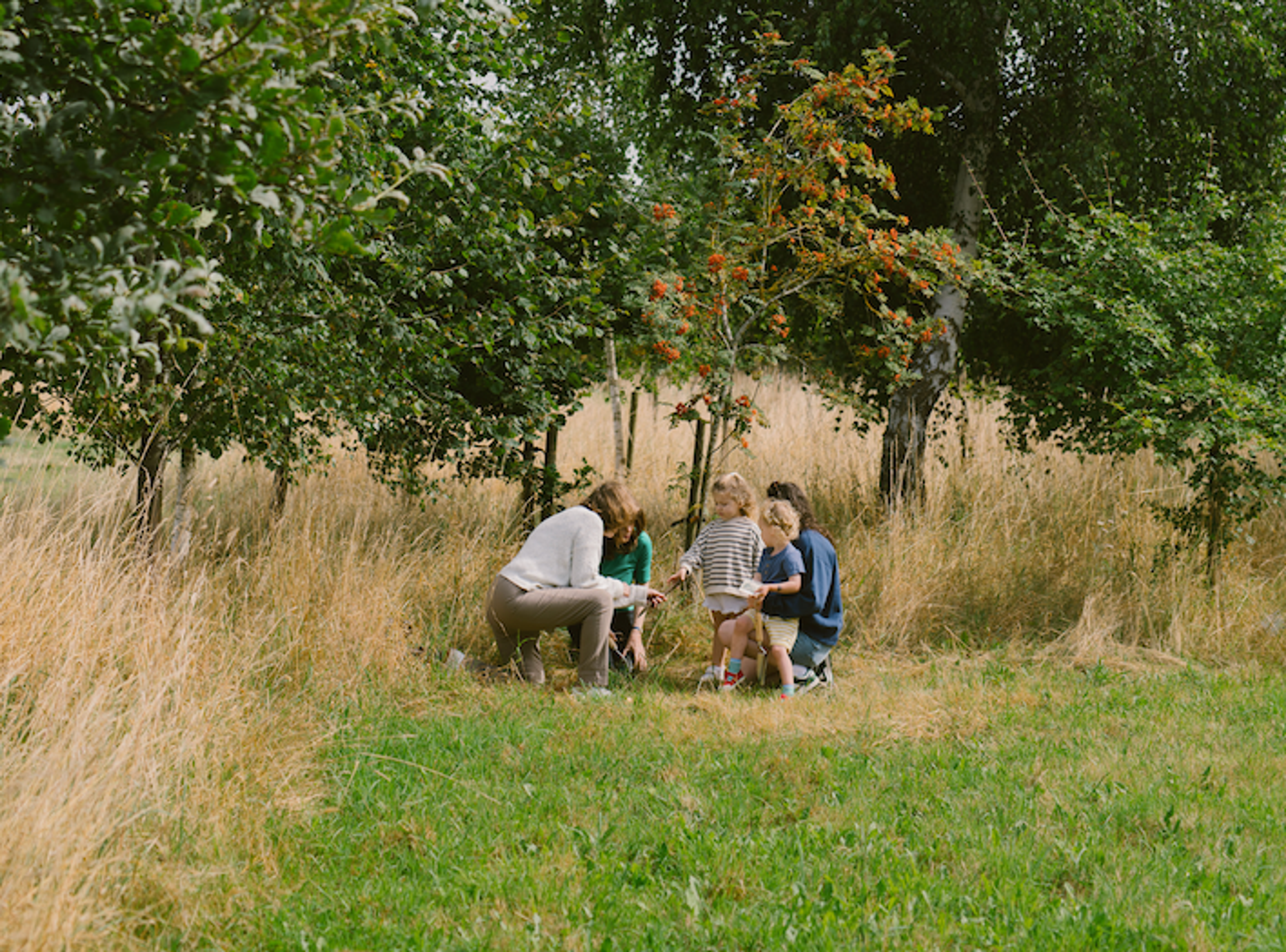
Planting a memorial tree extends that philosophy beautifully. Instead of creating a permanent monument from stone, families create something living. A tree grows, changes with the seasons, supports wildlife and becomes a place that future generations can visit.
There is something profoundly hopeful in the idea that one life can quite literally help nurture another.
Every family deserves the opportunity to say goodbye in a way that reflects the life that has been lived.If, in some small way, our Calabash urns help make that farewell more personal and more in harmony with nature, then we feel we have achieved exactly what we set out to do.
That belief sits at the heart of And Sow To Bed.